02 September, 2026
5 Things Affluent Buyers Now Expect From a Home
Table of Contents
- 1.Thoughtful design that goes beyond appearance
- 2.Hospitality-led service that makes everyday life easier
- 3.Privacy without giving up access to more
- 4.A home that supports more than one way of living
- 5.A setting that remains relevant over time
- 6.What this means for branded residential living
- 7.Westin Residences Gurugram
- 8.The expectation is becoming more considered
- 9.Frequently Asked Questions
For affluent buyers, the definition of a desirable home is changing.
The size of a residence, its address and the quality finishing remain important, but they are increasingly only part of the consideration. A home is also being assessed by how it feels to live there, how easily everyday requirements can be managed and whether the wider environment adds something meaningful to the experience of ownership.
This reflects a broader change in residential expectations. As people are becoming more familiar with hospitality-led service, considered design and professionally managed environments, they are beginning to look for those qualities closer to home.
That does not mean turning a residence into a hotel. The distinction between the two remains important. A home needs to provide privacy, independence and a sense of permanence. What is changing is the expectation that these qualities can coexist with thoughtful services, well-planned shared spaces and a level of attention to detail that extends beyond the front door.
For premium branded residences, this shift is particularly relevant. The proposition is no longer simply about the association with a recognised name. It is about what that association contributes to the way a residence is designed, operated and experienced.
Here are five expectations increasingly shaping the conversation around premium residential living.
Thoughtful design that goes beyond appearance
A well-designed home should do more than make a strong first impression. It should work naturally throughout the day and continue to feel appropriate as the way its residents live changes.
For affluent buyers, this can mean greater attention to proportions, natural light, materials, privacy, movement through the home and the relationship between indoor and outdoor spaces. These details may not always be immediately visible in a specification sheet, but they can influence how a residence is experienced over many years.
There is also a growing appreciation for design that feels considered rather than excessive. The objective is not to fill every space with features. It is to create an environment in which the different elements have a clear purpose and work together.
This becomes particularly important in a branded residence. The brand should be reflected through a coherent design philosophy rather than through superficial references. The residence needs to feel like a home first, while the influence of hospitality can be seen in the thought given to service, privacy and the wider living environment.
Good design also considers what happens beyond the individual apartment. Landscaped areas, shared spaces and transitions between private and communal environments can influence the overall character of a development.
For today's discerning buyer, the question is therefore not simply "How does the home look?" but "How thoughtfully has the home been designed for living?"
Hospitality-led service that makes everyday life easier
One of the clearest changes in premium residential expectations is the growing importance of service.
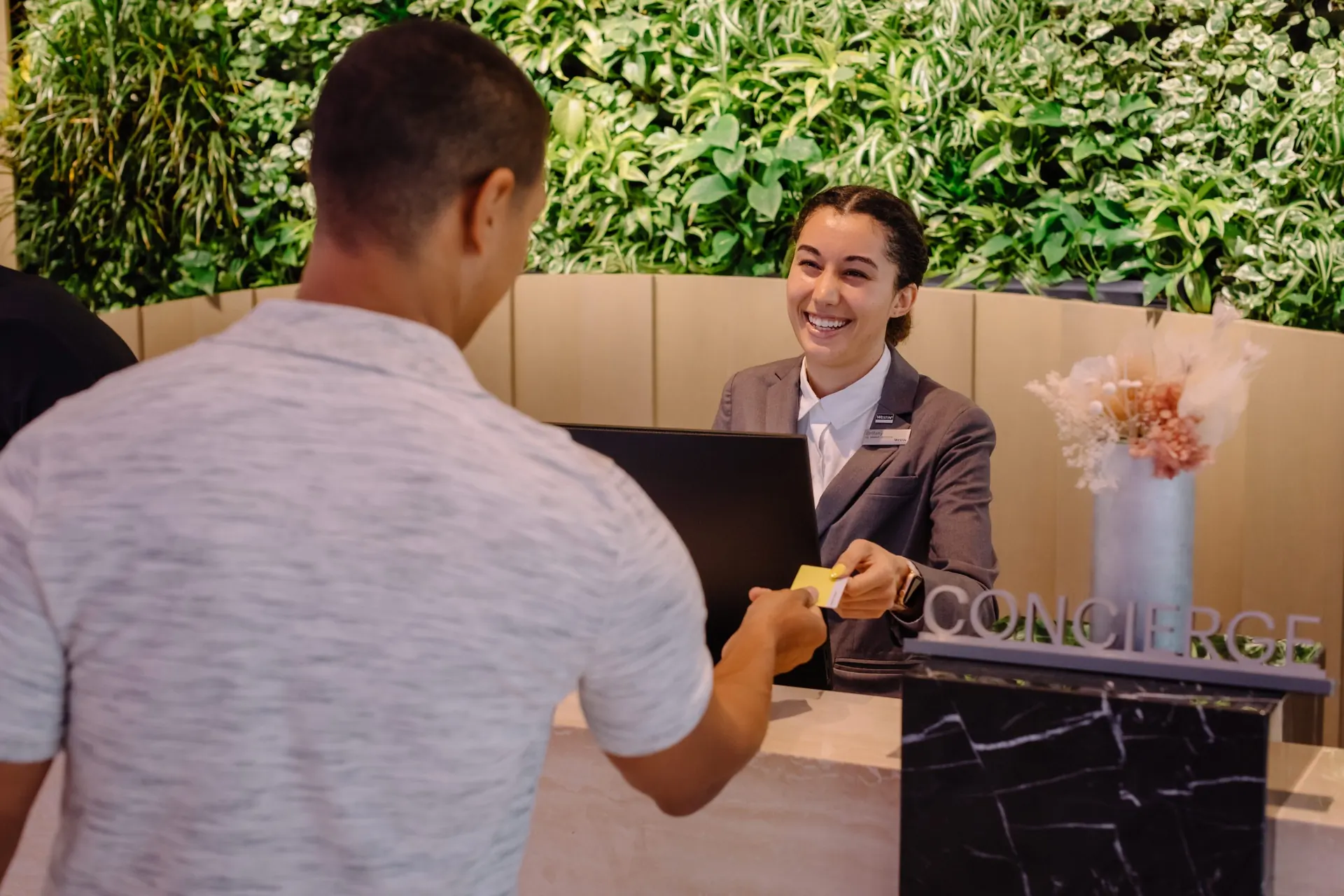
People are accustomed to receiving responsive service in many areas of life, and this can influence what they expect from their home. Concierge assistance, housekeeping, maintenance coordination, dining services and support from a professional residential team can reduce the practical demands that often accompany home ownership.
The value of such services lies in their usefulness rather than their visibility.
A good service experience should feel natural. A request should be handled efficiently. A shared space should be properly maintained. Assistance should be available when it is needed without becoming intrusive.
This is where the hospitality heritage of a branded residence can be meaningful. Hospitality brings an understanding of service, consistency and attention to the details of an experience. Applied thoughtfully to residential living, these principles can complement the privacy and independence of a private home.
The specific services available will vary from one development to another, which makes it important for buyers to understand what is actually offered and how it is managed.
For an affluent buyer, the expectation is increasingly not simply to own a well-appointed residence, but to have access to an environment that is well operated as well as well designed.
Privacy without giving up access to more
Privacy remains fundamental to a home. In fact, as residential developments become more connected and service-oriented, the ability to retreat into a private environment can become even more valuable.
At the same time, affluent buyers may not want every experience to take place within the residence itself.
They may value access to spaces for fitness, recreation, dining, work, social occasions and time outdoors, while still being able to return to the privacy of their own home.
This creates an important balance.
A well-planned residential development can provide a range of shared environments without making communal living feel intrusive. Residents can choose when to engage with the wider community and when to remain within their private space.
That sense of choice can be an important part of premium residential living.
The distinction is subtle but significant. The proposition is not about replacing private living with a constant stream of shared experiences. It is about creating an environment in which residents have more choice over how they spend their time.
For branded residences, this balance between privacy and access is particularly relevant. Hospitality can provide services and shared experiences, while the residence itself remains a private and personal space.
A home that supports more than one way of living
The idea of home has become broader.
A residence may need to accommodate focused work in the morning, family time in the evening, recreation at the weekend and social occasions at different points throughout the year. For some households, these requirements may change considerably over time.
Affluent buyers are therefore looking beyond the traditional distinction between the private residence and the outside world. They may value a wider residential environment that provides additional settings for different routines.
This could include spaces for exercise and recreation, places to meet friends, areas for focused work, dining options or landscaped environments where residents can spend time outdoors.
The important point is not the number of facilities. It is whether they genuinely contribute to the way people live.
A development with carefully considered spaces can offer residents greater flexibility without requiring the private home to accommodate every activity. This can also make the overall residential environment more adaptable as individual circumstances change.
For branded residences, this broader approach creates an opportunity to combine the permanence of home ownership with the service and experience associated with hospitality.
The result should not feel like a collection of amenities placed around a residential tower. It should feel like a coherent environment designed around different dimensions of everyday living.
A setting that remains relevant over time
For an affluent buyer, the value of a residence is rarely determined by the apartment alone.
Its setting, connectivity and relationship with the wider city can influence how well it serves its residents over time. Access to business districts, transport infrastructure, education, healthcare, retail, recreation and cultural destinations can all contribute to the practicality of a location.
The immediate environment matters too.
Landscaping, open spaces, the quality of shared areas and the way a development connects its different zones can influence the experience of arriving home and spending time within the community.
Long-term relevance also depends on how the property is maintained. A carefully designed residence can lose some of its appeal if common areas are not managed well or if services become inconsistent. For this reason, the operating model deserves as much attention as the original design.
This is an important distinction for branded residences. A recognised name may create an initial expectation, but the lasting value of the proposition depends on how effectively design, service, management and the wider setting work together.
For buyers considering a residence as a long-term home, the question is therefore broader than what exists today. It is also about whether the location, environment and operating standards can continue to support the way residents want to live in the years ahead.
What this means for branded residential living
These five expectations point to a broader change in the residential market.
Affluent buyers are not necessarily looking for more of everything. They are becoming more discerning about what adds genuine value to everyday life.
A larger residence may provide more space, but thoughtful planning determines how effectively that space is used. A long list of facilities may appear impressive, but their value depends on whether residents actually find them useful. Technology can simplify daily interactions, but only when it solves a genuine requirement. Services can add convenience, but their consistency matters as much as their availability.
This is where branded residences occupy an interesting position within the residential market.
The category brings together elements that have traditionally been considered separately: private home ownership, considered design, hospitality expertise, professionally managed shared environments and services designed around residents.
The strongest propositions are likely to be those where these elements feel connected rather than added individually.
Westin Residences Gurugram
Westin Residences Gurugram offers an example of how hospitality-led principles can be brought into a residential setting.
Located in Sector 103, the development brings private residences together with landscaped surroundings, recreational spaces, dining and a range of hospitality-inspired services. The wider environment is designed to give residents access to different settings for everyday routines while retaining the privacy and independence of a private home.
The approach reflects a broader shift in premium residential living. The residence itself remains central, but the experience surrounding it can also influence how people choose to live.
The role of hospitality is therefore not to replicate a hotel within a residential development. It is to consider which principles of service, attention and operational consistency can genuinely contribute to life at home.
That distinction is likely to become increasingly important as branded residences develop as a category. Buyers may look beyond the name associated with a property and consider what that name actually brings to the experience of ownership.
The expectation is becoming more considered
The future of premium residential living may not be about continually adding features. It may be about making better decisions about the features, services and spaces that genuinely matter.
Affluent buyers are increasingly able to distinguish between what looks impressive at first glance and what continues to be valuable in everyday life.
A well-designed residence should provide privacy without isolation, services without intrusion, shared spaces without unnecessary complexity and technology without allowing it to dominate the experience.
Most importantly, it should feel considered.
That may ultimately be the defining expectation behind the next generation of branded residential living: not simply a better-appointed home, but a more thoughtful way of living around it.
Frequently Asked Questions
What is hospitality-led residential living?
Why are services becoming more important in premium residential developments?
How do branded residences combine privacy with hospitality services?
What should buyers consider beyond the specifications of a residence?
Explore Westin Residences Gurugram.
About the Publisher:This article is published by Whiteland Corporation, a premium real estate developer with a focus on lifestyle-led residential projects in Gurugram. The insights shared are based on evolving residential trends, buyer behaviour, and long-term market observations.
Recent Blogs
←Back to all blogs
What Makes a Residence Future-Ready?
Read More →
Why Well-Being Is Becoming a Differentiator in Real Estate
Read More →
The Value of Professionally Managed Living
Read More →