05 September, 2026
Why Branded Residences Are Becoming the Next Residential Category
Table of Contents
- 1.From a Home to a More Complete Living Experience
- 2.What Makes a Residence Truly Branded?
- 3.Why Amenities Are Becoming More Meaningful
- 4.Well-being Is Moving Into the Home
- 5.What Hospitality Can Add to Residential Living
- 6.The Long-Term Value of Service and Operations
- 7.Design Should Work as Well as It Looks
- 8.Branded and Traditional Housing
- 9.Why Location Remains Fundamental
- 10.Why the Category Is Gaining Attention in India
- 11.What Should Buyers Look For in a Branded Residence?
- 12.What the Future May Look Like
- 13.From Branded Home to Residential Experience
- 14.Westin Residences Gurugram
The meaning of home has always extended beyond the walls of a residence. It is where people begin and end their days, spend time with family, welcome friends, work, and establish routines that often remain with them for years. Yet the expectations attached to that experience are changing.
For a long time, residential decisions were largely centred on location, space, architecture, finishes and amenities. These remain fundamental considerations, but they are increasingly being viewed alongside questions about how a home supports everyday life. How convenient is it to manage the demands of a busy week? Does the environment encourage well-being? Are services available when they are genuinely useful? Can the spaces accommodate different stages of life without becoming disconnected from the wider city?
These changing expectations are creating space for a residential format that sits between conventional home ownership and hospitality.
Branded residences are part of that evolution.
The concept is not simply about associating a recognised name with a residential development. At its most considered, it brings together a brand's philosophy, design sensibility, service culture and operational expertise with the privacy and permanence of a private home.
That distinction is important because the value of a branded residence is ultimately determined by what the brand contributes to the experience of living there. When hospitality, well-being, thoughtful design and service are integrated into the development rather than treated as additions, the result can be a fundamentally different approach to residential living.
From a Home to a More Complete Living Experience
The traditional definition of a home is changing partly because people's lives have become more complex.
Work may extend beyond the office. Families may have different schedules. Travel may be frequent. Social life may move between home and the city. At the same time, health and well-being have become increasingly connected to everyday decisions about where and how people live.
This has made the residential environment more important than simply the apartment itself.
A well-planned residence can provide privacy and comfort, while the wider development can reduce some of the practical friction associated with urban life. Access to fitness facilities, outdoor spaces, dining, guest accommodation, concierge support and other services can make certain routines easier to manage.
The appeal is not necessarily about having more of everything. It is about having the right things available in a way that feels natural.
That is one reason branded residences are gaining attention as a distinct residential category. They recognise that the experience of home can extend into the spaces, services and support that surround it.
What Makes a Residence Truly Branded?
A branded residence should offer more than a familiar name.
The relationship between the brand and the development is what gives the concept meaning. Depending on the project, that relationship can influence architecture and interiors, service standards, resident amenities, well-being programmes, dining, concierge services and long-term property operations.
Hospitality brands are particularly suited to this model because they have spent decades understanding how people experience places. They know that the quality of a stay is shaped not only by the room itself, but also by arrival, service, food, atmosphere, well-being, attention to detail and the way every element works together.
Translating that knowledge into a residential environment requires a different approach.
A home cannot operate like a hotel, nor should it. Residents expect privacy, familiarity and a sense of permanence. Hospitality therefore needs to be adapted to residential life, providing service when it adds value without taking away from the independence of owning a home.
This balance is at the heart of the category.
The strongest branded residences are not trying to make residents feel like guests. They are creating an environment where the benefits of hospitality can become part of everyday living.
Why Amenities Are Becoming More Meaningful
Amenities have been a familiar part of residential development for decades. What is changing is the way they are being evaluated.
A list of facilities can tell a prospective buyer what a development contains, but it does not necessarily explain how those facilities will fit into daily life. A fitness centre, for example, becomes more valuable when it is genuinely convenient to use. A landscaped garden has greater meaning when it provides somewhere to walk, pause or spend time outdoors. A clubhouse becomes more relevant when it supports different types of activity rather than serving a single purpose.
This is a shift from amenities as features to amenities as experiences.
The Clubhouse & Amenities at Westin Residences Gurugram bring together fitness, sport, movement, recreation, dining, work and social spaces. Facilities include tennis, badminton, squash, pickleball, fitness areas, movement and yoga studios, children's spaces, games rooms and a movie theatre, alongside outdoor areas designed for walking, jogging, cycling and leisure.
The significance is not simply the range of facilities.
It is the possibility of building different routines within the same environment. A resident might exercise before work, use a shared space during the day, spend time with family in the evening or simply take a walk without leaving the community.
That is a more useful way to think about residential amenities. Their value comes from how naturally they become part of life.
Well-being Is Moving Into the Home
Westin's broader approach to well-being informs how the brand considers rest, movement, nourishment, connection, productivity and leisure across the guest and residential experience.
What Hospitality Can Add to Residential Living
The relationship between hospitality and residential life becomes particularly interesting when considering service.
A private home provides independence. Hospitality can provide support around that independence.
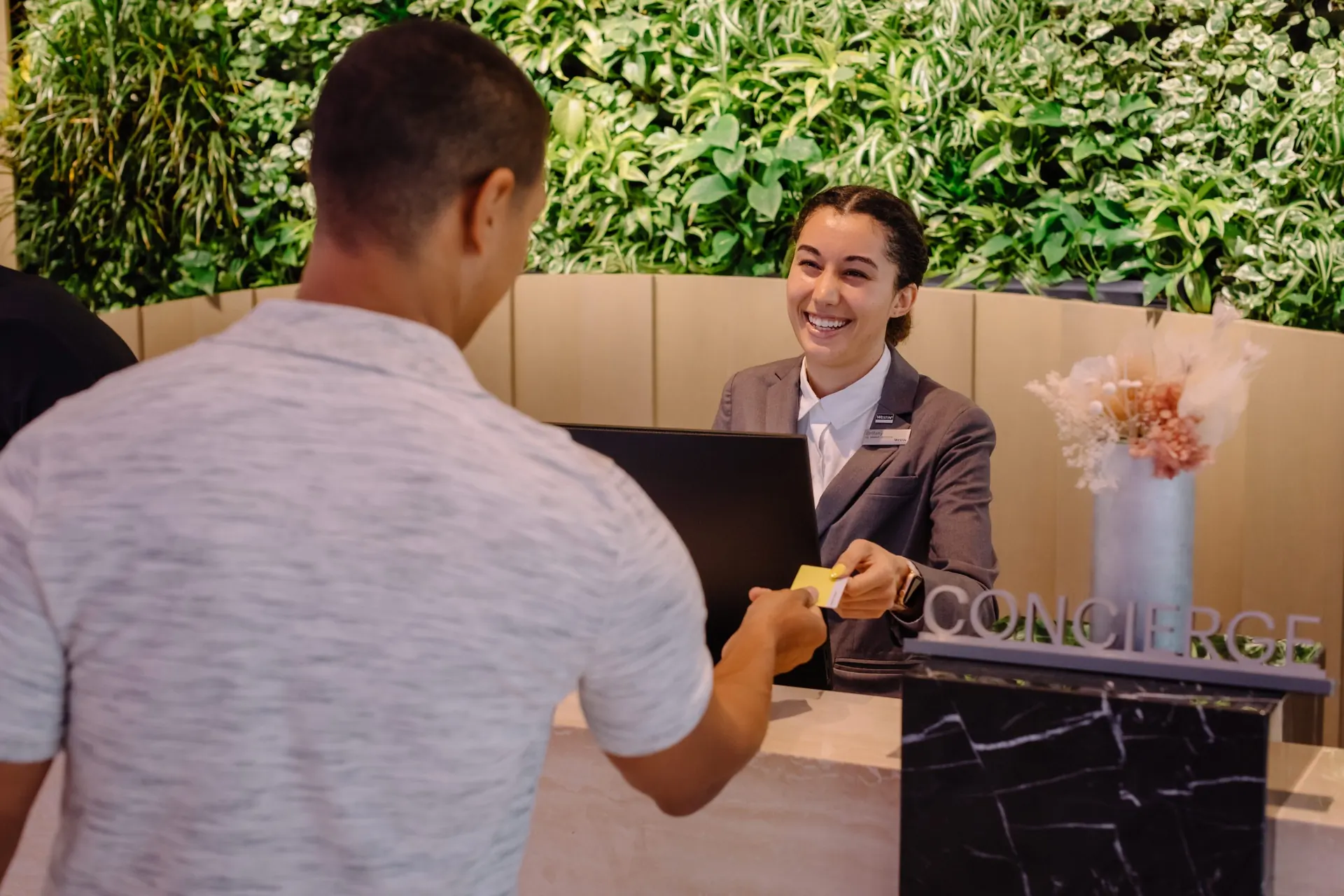
A concierge can assist with arrangements. Housekeeping can help with selected household needs. Dining services can provide an alternative when residents want convenience. Guest suites can make visits more comfortable for family and friends. Transportation and other support services can remove some of the smaller tasks that occupy time during a busy week.
Within Westin Residences Gurugram, the Hospitality & Lifestyle offering gives residents access to services including concierge support, in-residence dining, housekeeping, guest suites and other assistance designed to support everyday living.
The important point is not the number of services available. It is the choice they provide.
Good hospitality does not need to make every decision for a resident. It should make life easier when assistance is wanted and remain unobtrusive when it is not.
That is what makes hospitality relevant to a home. It supports the resident rather than defining the resident's lifestyle.
The Long-Term Value of Service and Operations
The design of a new residence often receives the greatest attention before completion. Over time, however, the quality of operations can become just as important.
Shared spaces need to remain well maintained. Facilities need to function as intended. Resident requests need to be handled consistently. Common areas need to retain the character and quality that attracted residents in the first place.
This is where the operational side of branded residences becomes significant.
An established hospitality brand brings experience in service delivery and property operations, but buyers should still look beyond the brand name. Understanding who operates the property, what services are available, how they are delivered and which services involve additional charges provides a clearer picture of the proposition.
The same principle applies to wider development.
A well-designed residence can create an excellent first impression. Consistent management helps sustain that experience.
For a residential property intended to be occupied for many years, that continuity matters.
Design Should Work as Well as It Looks
Residential design has always been about appearance, but the most successful spaces tend to do something more.
They support the rhythms of daily life.
A home needs to accommodate quiet mornings, focused work, family meals, social occasions and restful evenings. It should feel comfortable when used every day, not simply when presented as a finished space.
Within Westin Residences Gurugram, the Residences draw on natural materials, large windows and connections between indoor and outdoor spaces. The design approach is intended to create a strong sense of continuity between the private home and its surrounding environment, while allowing the spaces to adapt to different patterns of daily life.
This approach reflects a wider movement in residential design towards spaces that feel connected to nature and adaptable to different routines.
The objective is not to create a residence that simply photographs well.
It is to create one that continues to make sense once everyday life begins.
Branded and Traditional Housing
The distinction between branded residences and traditional housing is not simply about price, size or the number of amenities.
A conventional residential development can provide excellent architecture, strong facilities and effective management. A branded residence adds another dimension through the involvement of a recognised brand and the experience associated with it.
That involvement may extend across design, service, well-being, hospitality and operations.
For buyers, the distinction is therefore less about choosing between a "better" or "worse" type of home and more about choosing the kind of living experience they value.
Some people may prefer complete independence with limited services. Others may appreciate having support available without needing to arrange it separately. Some may place greater importance on well-being and recreation within the community, while others may prioritise location or the flexibility of the residence itself.
There is no universal answer.
The purpose of a branded residence is to offer another option.
Its value depends on how well the different elements work together and whether they genuinely match the needs of the people who live there.
Why Location Remains Fundamental
Even the most comprehensive residential environment exists within a larger city.
Location therefore remains one of the most important considerations.
Connectivity to workplaces, schools, healthcare, retail, entertainment and transport affects everyday convenience. A residence also needs to offer a sense of retreat from the city without becoming disconnected from it.
This balance is particularly relevant in Gurugram, where the city's growth continues to create new residential and commercial corridors.
Westin Residences Gurugram is located in Sector 103 along the Dwarka Expressway, within a master-planned community of approximately 20 acres. Its location offers access to major destinations across Gurugram and Delhi NCR, while the internal planning places emphasis on landscaped areas and pedestrian-friendly movement.
The combination is significant.
A residence should make it convenient to reach the places that matter outside the community, while providing an environment that residents can enjoy once they return home.
Why the Category Is Gaining Attention in India
India's residential market is becoming increasingly diverse.
As cities develop and consumer expectations evolve, buyers are considering a wider range of residential formats. Greater exposure to international travel and hospitality has also made many consumers familiar with service standards and lifestyle experiences that were once associated mainly with hotels and resorts.
Those expectations do not necessarily disappear when people return home.
A buyer may value privacy while still appreciating assistance when needed. They may want access to fitness and well-being facilities without having to travel across the city. They may want spaces that work for family life, social occasions and professional routines.
Branded residences can respond to these expectations by bringing selected elements of hospitality into the residential environment.
The category does not need to replace conventional housing.
It simply provides another way of approaching the relationship between home, service and lifestyle.
What Should Buyers Look For in a Branded Residence?
As the category develops, buyers are likely to become more discerning about what a brand actually contributes.
The first question is therefore straightforward: What does the brand bring to the residence?
That can include design direction, service standards, well-being programming, hospitality expertise or operational support. The relationship should be clear rather than limited to branding.
The second consideration is who operates the property and how it will be managed over time. The long-term experience depends heavily on consistent maintenance, service and management.
It is also worth examining the services themselves. Buyers should understand what is available, what is included and which services may involve additional charges.
The same approach applies to amenities. Rather than counting facilities, consider whether they are useful and whether they support the routines residents are likely to have.
Well-being deserves similar attention. Look beyond a gym and consider how rest, movement, outdoor spaces, nutrition and opportunities for rest have been incorporated into the wider environment.
Finally, consider the fundamentals that apply to any home: location, design, construction quality, functionality and long-term management.
A recognised brand can add an important layer of value, but it works best when it sits on a strong residential foundation.
What the Future May Look Like
The next phase of branded residences is likely to be shaped by increasingly informed buyers.
As people become more familiar with the category, the presence of a recognised name alone will become less important. Buyers will want to understand what the brand stands for and how that philosophy appears in the actual experience of living there.
This could encourage greater focus on service quality, thoughtful design, well-being, technology and long-term operations.
Technology may make everyday services easier to access, from booking facilities to communicating with property teams. Well-being may become increasingly integrated into architecture and planning. Sustainability is also likely to remain an important consideration as buyers pay closer attention to the environmental performance and long-term resilience of buildings.
Yet technology and amenities should remain means to an end.
The objective is still remarkably simple: to create a home that works well for the people who live there.
That is where the category has an opportunity to mature.
From Branded Home to Residential Experience
The evolution of branded residences reflects a broader change in the way residential value is understood.
Space, location, design and quality remain essential. What is changing is the recognition that the experience surrounding the private home can influence how satisfying it is to live there over many years.
Hospitality introduces service.
Well-being introduces a broader understanding of health and balance.
Thoughtful design connects the home with the way people actually live.
Good operations help maintain that experience long after the development has opened.
When these elements are brought together with care, a branded residence becomes more than a home carrying a familiar name. It becomes a residential environment built around a particular philosophy of living.
That may explain why the category is gaining attention across markets and why it is becoming increasingly relevant in India.
For some buyers, the appeal will be the convenience of having services close at hand. For others, it may be the integration of well-being, design or community. For many, it may simply be the opportunity to own a home while enjoying selected elements of hospitality without giving up privacy or independence.
What these different expectations have in common is a broader consideration of what a home needs to support over time. As expectations continue to evolve, the residential experience is likely to become just as important as the physical residence.
Branded residences offer one response to that shift, bringing together the permanence of home ownership with selected elements of hospitality and service.
Westin Residences Gurugram
Westin Residences Gurugram offers one example of how hospitality can be translated into a residential setting.
The project brings together private residences, well-being-led design, hospitality-inspired services and a broad range of spaces for fitness, recreation, dining and everyday life. Its approach draws on the Westin philosophy of well-being while giving residents the privacy and permanence expected from a home.
Its location in Sector 103 adds another dimension, connecting the residential environment with the wider Gurugram and Delhi NCR region while creating a landscaped setting within the development.
Ultimately, the proposition is not about adding a hotel experience to a home. It is about considering which elements of hospitality can genuinely contribute to residential life.
As the category continues to evolve, that distinction may become increasingly important. The future of residential living may not be defined by how many features a home contains, but by how thoughtfully those features, services and spaces work together.
That is where branded residences have the potential to become a meaningful next category in the way people think about home.
Explore Westin Residences Gurugram.
About the Publisher:This article is published by Whiteland Corporation, a premium real estate developer with a focus on lifestyle-led residential projects in Gurugram. The insights shared are based on evolving residential trends, buyer behaviour, and long-term market observations.
Recent Blogs
←Back to all blogs
What Makes a Residence Future-Ready?
Read More →
Why Well-Being Is Becoming a Differentiator in Real Estate
Read More →
The Value of Professionally Managed Living
Read More →